

You have had the bat three weeks, you have looked after it, and there is a crack down the face. Before you panic: this is probably fine. Cricket bats crack. It is what happens when you hit a hard leather ball with a soft piece of wood, several hundred times a season, on purpose.
The question is not whether your bat has cracks. It is which cracks it has.
Cracks that are completely normal
Fine surface cracks on the face. Small vertical hairlines in the hitting area are the willow doing exactly what it is meant to do. The fibres compress, harden and settle. A bat with a few surface cracks in the middle is often a bat that is coming into its best. Leave them alone.
Small cracks along the edges. Edges take a beating and they will show it. If the crack is shallow, short and not opening up, it is cosmetic. Keep an eye on it.
Compression marks and seam prints. Not cracks at all. Just evidence you have been middling it.
Cracks worth acting on
An edge crack that is opening up. If you can get a fingernail into it, if it is growing week to week, or if it runs deep into the blade, get it repaired. Left alone, an open edge crack propagates and can take the whole edge with it.
Toe cracks and toe splitting. Very common in Australia, and almost always caused by two things: hard, abrasive pitch surfaces, and moisture. Every time you tap the toe on a damp pitch, or stand the bat in a wet corner of the shed, the end grain draws water up into the blade. Wet willow swells, then dries out, then splits. A toe repair is straightforward and worth doing early.
Cracks running from the shoulder into the splice. Take this seriously. The splice is the V-shaped joint where the cane handle is glued into the blade, and it is the highest stress point on the bat. A crack there is structural, and it usually means a new handle. See our cricket bat rehandle options.
Cracks that mean the bat is finished
Be honest with yourself about these:
- A crack running the full length of the blade, front to back.
- A split splice, where the handle is moving independently of the blade.
- The face has gone soft and spongy in the middle and no longer rebounds. Not a crack, but the bat is dead. Willow has a life.
Why bats crack early
Almost every premature failure we see in the workshop traces back to one of these.
1. Not knocked in properly. By a mile the biggest cause. The edges and toe were never rounded and hardened, so the first genuinely quick ball found soft, square wood. Read our full guide to knocking in a bat.
2. Yorkers and toe-enders. Nothing you can do about the ball. You can protect against it with a toe guard.
3. Moisture. Wet pitches, wet grass, wet kit bags, a bat stood toe-down in a damp garage all winter.
4. Bad balls and hard balls. Cheap, over-hard practice balls do more damage to a bat than a good match ball ever will. Bowling machine balls are also brutal on a face.
5. Age. Willow dries out. A bat that has done four hard seasons has earned its retirement.
Most cracks are repairable
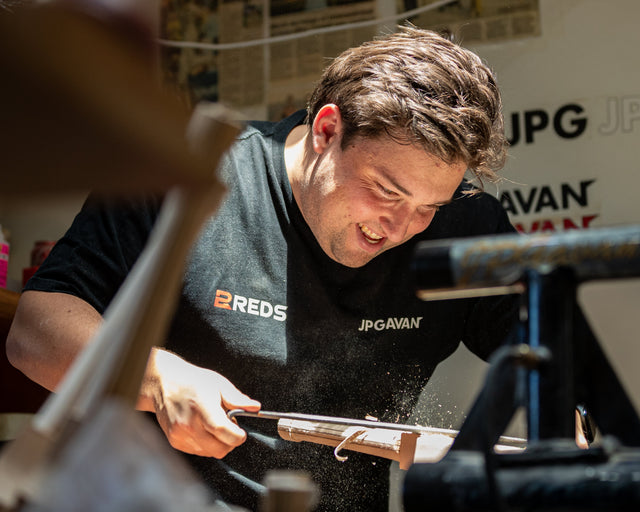
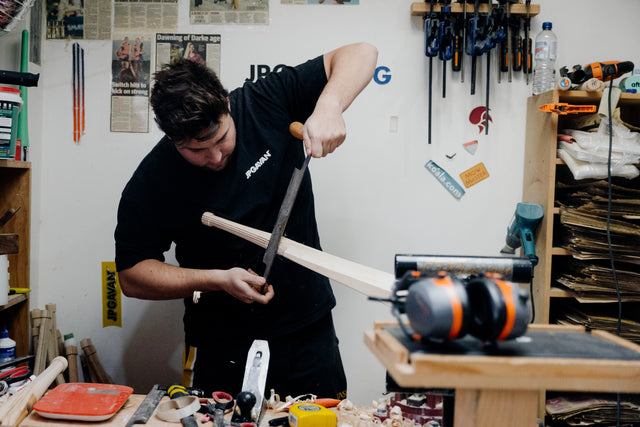
This is the good news, and it is the part most players do not realise. A cracked edge can be glued, clamped and re-bound. A toe can be cut back, rebuilt and sealed. A face can be re-pressed and re-sheeted. We repair bats every week in our Sydney workshop, including bats we did not make and bats belonging to professionals.
A repair is almost always cheaper than a new bat, and a repaired bat that you know and trust is worth more to your batting than a shiny new one you have to start again with. Have a look at our cricket bat repairs.
Where the warranty sits
Every JPGavan bat is covered for 12 months from purchase against faults that show up in normal play, and we repair those free of charge. What is not covered is ordinary wear and tear, damage from misuse, and damage from a bat that was not prepared before it was used. That is not us being difficult, it is the difference between a fault in the bat and a fault in how it was treated. Full terms are on our warranty and bat care page.
If you are not sure what you are looking at, send us a photo. We will tell you honestly whether to ignore it, repair it, or start saving.


0 comments