

Two bats can be the same grade, same weight and same length, and play like completely different tools. Nine times out of ten, the reason is where the middle sits.
What the "middle" actually is
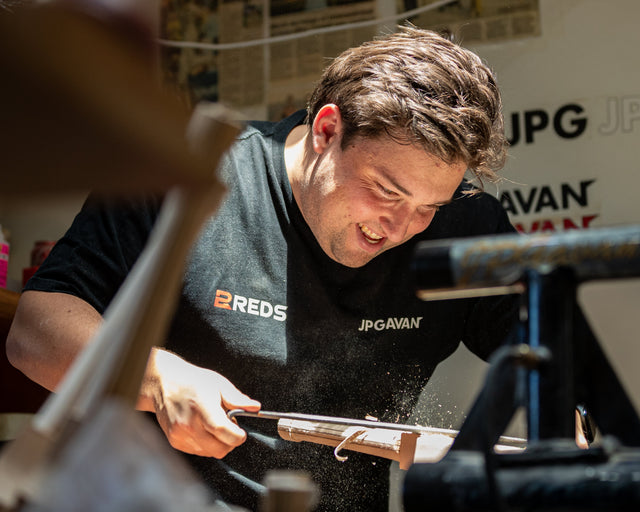
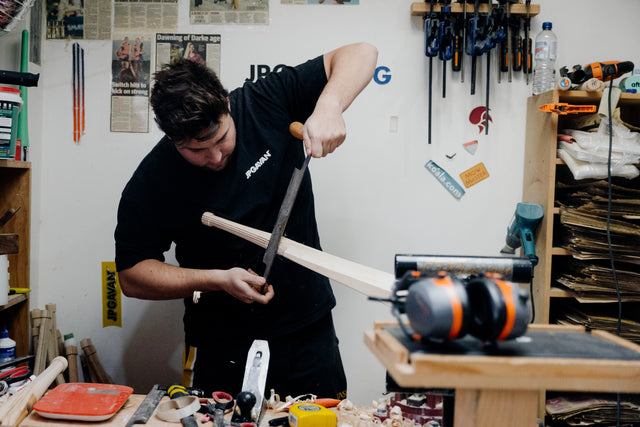
The middle, or sweet spot, is the area of the blade where the bat returns the most energy to the ball. It sits under the peak of the spine, the ridge running down the back of the bat. Where we put that peak when we shape the bat is where the middle ends up.
We measure it as a percentage of the blade length, measured up from the toe:
| Middle | Position from toe |
|---|---|
| Low | 25% of the blade |
| Mid-low | 30% |
| Mid | 35% |
| Mid-high | 40% |
| High | 45% |
Those percentages are the real numbers we shape to on the bench. They sound like small differences. On a 550mm blade, the gap between a low and a high middle is more than 10cm, and you feel every bit of it.
Low middle
The peak sits down near the toe. This is a front foot driver's bat. It rewards the ball you get right under, on a low, slow, subcontinental-style deck where the ball stays down and you are hitting through the line.
The trade-off is that the wood is low in the blade, so it can feel heavier in the hands, and there is less bat above the middle for anything that climbs.
Mid-low
Still a driver's bat, but with a bit more insurance square of the wicket. A good pick if you play most of your cricket on flat, low tracks but you do not want to be caught out completely when one bounces.
Mid middle
Our most popular by a distance, and for good reason. The middle sits in the centre of the blade and the bat has no strong opinion about which shot you play. Drives, cuts, pulls, sweeps: all of it works.
If you play on a mix of surfaces, if you bat anywhere in the middle order, or if you are simply not sure, this is the one to take. It is the safest choice on the board and it is not a compromise, it is a genuinely balanced bat.
Mid-high
The middle creeps up the blade. This suits a player who spends more time on the back foot and plays on decks with a bit of carry. The pick-up is generally a touch lighter, because the wood has moved up toward the hands.
High middle
The peak sits high in the blade, and the toe comes down thin. This is a bat for hard, bouncy Australian and South African wickets, built for the pull, the cut and the punch off the back foot.
The catch: if you are a front foot player who tries to drive with a high-middled bat on a low deck, you will keep missing the sweet spot with the shot you play most. It picks up beautifully and it is not the bat for you.
How to choose in practice
Ask two questions.
1. Where do you play most of your cricket? Not where you would like to play. Where you actually bat, most weeks. Hard and bouncy points up the blade. Low and slow points down.
2. Which shot do you play when you are batting well? Be honest. If your best shots are the cover drive and the on drive, go mid or lower. If it is the pull and the cut, go up.
If those two answers conflict, or if you genuinely do not know, take the Mid. It is popular because it works. Every one of our pre-made cricket bats lists its sweet spot, so you can shop by middle.
See it before you commit
This is exactly why we built the custom cricket bat builder: you can select each middle position and watch the side profile of the bat physically change as you do. You can see the toe thin out as the middle rises, and see the spine peak move up the blade.
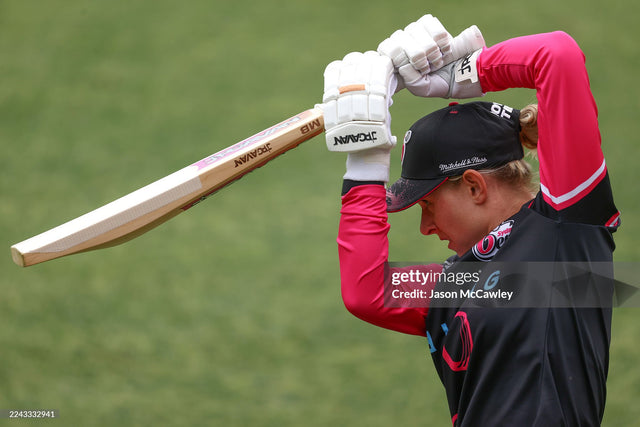
If you want to skip the theory entirely, our Pro Shape Builder lets you pick the exact shape one of our sponsored professionals plays with and have your bat built to it. Katie Mack, Maitlan Brown, Nicola Hancock and others: their real specs, in 3D, and you can rotate the bat to see the middle for yourself.
Still stuck? Tell us where you play and what you hit, and we will pick it for you.


0 comments